Book Appointment Now


FemiCore Review: Ingredients, Claims & Safety Guide
FemiCore Review: Ingredients, Claims and What to Know Before You Buy
Bladder concerns are far more common than most people admit. Urgency, frequent bathroom trips and small leaks can quietly shape how a woman plans her day, and many look for gentle, non-prescription ways to feel more in control. FemiCore is one of several bladder support supplements aimed at this group. Before you spend money on it, it helps to know what it contains, what research says about those ingredients, and where the marketing runs ahead of the evidence. This independent guide covers the listed formula, how it is said to work, safety points, the refund policy and the everyday habits that matter most for urinary health.
What is FemiCore?
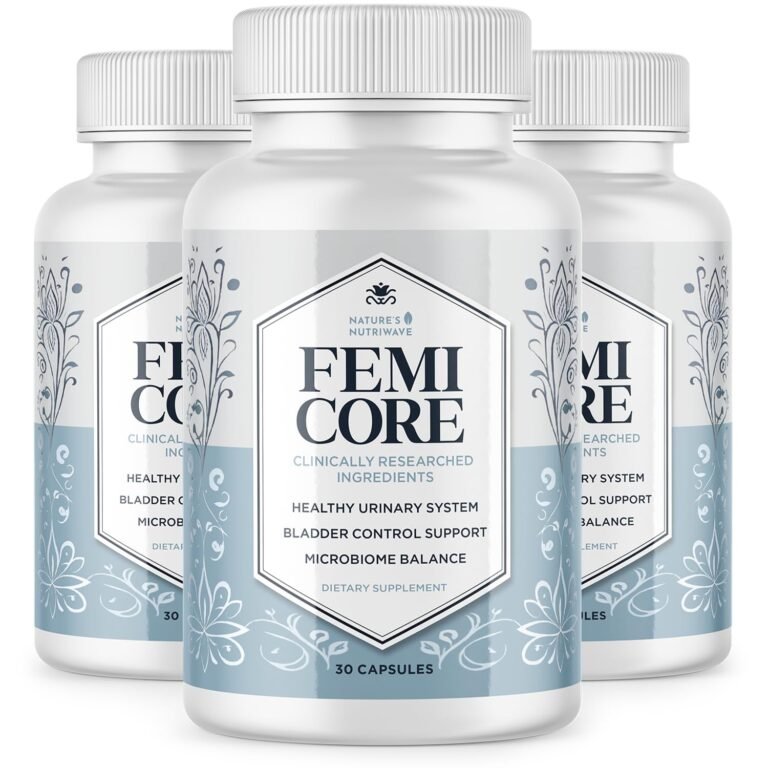
FemiCore is marketed as a daily women’s bladder support supplement. Each capsule combines a 350 mg herbal blend with a 50 mg blend of five Lactobacillus probiotic strains, taken once a day. A bottle holds 30 capsules, so it is a 30-day supply, and the seller describes a one-time purchase with no autoship enrollment. It is positioned for adult women researching non-prescription options for urinary urgency, frequency and stress leakage, and it is promoted as supporting bladder control, urinary microbiome balance and healthy urinary system function.
It is important to be clear about what FemiCore is not. It is a dietary supplement, not a medicine, and the label language says it is not intended to diagnose, treat, cure or prevent any disease. It is also not a cure for incontinence, overactive bladder, urinary tract infections or pelvic floor problems. Reviews of products like this generally describe them as supportive, not as replacements for diagnosis or treatment.
One more caution applies to the source material. Much of the online coverage of FemiCore is promotional. Some articles carry “buy now” links, and at least one discloses that a commission may be earned on purchases made through its links. There are also pages that describe FemiCore differently, as a women’s energy and hormone-balance product, which does not match the bladder-support descriptions elsewhere. That inconsistency is a good reason to read the label on the official site before you decide anything.
Why bladder support is a popular search
Several things drive interest in this category. Bladder symptoms tend to increase around and after menopause, after childbirth, and with age, and many women feel embarrassed to raise them with a doctor. A supplement feels like a private, low-effort first step. Others are looking for something to use alongside medical advice, or want to support the urinary system after repeated urinary tract infections.
The trouble is that “bladder problems” is not one condition. Urgency, stress leakage, nighttime urination and recurrent infections each have different causes and different treatments. A supplement that is marketed for general bladder support cannot address all of them. That is why talking to a healthcare provider first matters, especially if symptoms are new or getting worse.
FemiCore ingredients explained
The herbal blend is listed as cranberry extract standardized to 30% proanthocyanidins, bearberry, berberine standardized to 8%, and Mimosa pudica seed extract. The probiotic blend includes five Lactobacillus strains, among them L. acidophilus LA88 and L. plantarum N13, with LC16 as the fifth. Reviews describe it as a microbiome-oriented formula rather than a basic cranberry supplement.
Here is how the evidence generally looks for each ingredient. This comes from wider research on these ingredients, not from studies of FemiCore itself.
Cranberry has the strongest backing of the group. Its proanthocyanidins may make it harder for certain bacteria to stick to the urinary tract lining, and some trials suggest cranberry products can reduce recurrent urinary tract infections in certain women. Results depend on the dose and the product, and cranberry has not been shown to treat an infection that has already started.
Bearberry, also called uva ursi, is a traditional urinary herb. It is usually advised only for short-term use, and long-term use is generally discouraged, so it is worth asking a pharmacist about it.
Berberine is a plant compound studied mainly for blood sugar and cholesterol. It can interact with some medicines and is generally not recommended during pregnancy. Its role in a bladder formula is less established than its role in metabolic health.
Mimosa pudica seed extract has only small studies on urinary symptoms. It is an interesting ingredient, but the evidence is early, so it should not be treated as proven.
Lactobacillus probiotics have some promise for vaginal and urinary microbiome balance. Benefits are strain-specific, though, and results across studies are mixed, so a probiotic’s name alone does not tell you what it will do.
The main limitation is transparency. The herbal blend totals only 350 mg, and the sources I found do not clearly break out how much of each ingredient it contains. Studies often use specific, higher doses of a single ingredient, which makes it hard to compare FemiCore’s capsule to the research. In other words, ingredient studies can suggest a formula is reasonable, but they cannot confirm that this product works.

How FemiCore is said to work
The seller’s pitch is dual support in one capsule. The herbal side is meant to support bladder control and healthy urinary function, while the probiotics aim to support the urinary microbiome. The appeal is convenience: one daily capsule in place of several separate products.
Reviews also frame it as a gradual product, not a fast fix. One overview suggests evaluating it over roughly 16 weeks while tracking symptoms, because it is hard to tell whether changes come from the supplement, lifestyle adjustments or natural ups and downs. That is sensible advice for any supplement, and it is the most useful part of the marketing material.
What the research can and cannot tell you
It helps to separate three levels of evidence. The first is traditional use, where an herb has been used for centuries for a purpose. That is interesting, but it is not proof. The second is ingredient-level research, such as trials of cranberry or specific probiotic strains. That is more meaningful, but it applies to the doses and extracts tested. The third is product-level research, where the finished capsule itself is tested in people. For FemiCore, I did not find an independent published trial at that level.
That does not mean the product cannot help anyone. It means claims such as “clinically proven” should make you ask which study, on which product, in whom, and at what dose. Be careful with testimonials too. Individual stories cannot show cause and effect, because bladder symptoms naturally rise and fall, and people often start new habits at the same time they start a supplement.
Who might consider it, and who should ask first
FemiCore may suit women who have already seen a doctor, ruled out infection and other medical causes, and want a supportive supplement alongside proven habits such as pelvic floor training. It is a poor first response to new or painful symptoms, where getting checked comes first.
Ask a healthcare professional before using it if you are pregnant or nursing, take regular medication, have kidney, liver or other medical conditions, or are under 18. The label itself advises these groups to consult a physician.
Safety and side effects
Cranberry and probiotics are generally well tolerated, but the herbal ingredients call for more care. Berberine can interact with medicines, and bearberry is usually recommended for short periods only. Mild digestive upset, such as bloating or stomach discomfort, is a possibility with many supplements. If you feel unwell, stop and seek advice.
Label cautions for FemiCore include not exceeding the recommended dose, keeping it out of reach of children, and consulting a physician if you are pregnant, nursing, under 18 or have a known medical condition. Treat these as real instructions, not boilerplate.
Seek medical advice instead of self-treating if you notice pain or burning, fever, blood in the urine, back pain or sudden new symptoms. These can signal an infection or another condition that needs proper treatment, and a supplement can delay getting it.
Price, ordering and the refund policy
According to the sources, FemiCore is ordered through the official website as a one-time purchase, with order support handled through a third-party payment platform, and no autoship enrollment. Reviews also refer to a 180-day product overview, which suggests a 180-day money-back window. I could not confirm the exact refund terms from independent sources, so check the claim process, conditions and any return-shipping rules on the official page before you pay. Keep your order confirmation and bottle in case you need to claim a refund.
How to run a fair trial
If you decide to try it, treat it like a small experiment. Before starting, spend a week noting how many times you urinate by day and night, how often urgency or leaks happen, and how much you drink. Take one capsule daily with 6 to 8 ounces of water, as the label directs, and avoid changing several habits at once, or you will not know what helped. Review your notes at four, eight and twelve weeks. If nothing has improved by the end of the trial period, use the refund option and talk to a clinician about other options.
FemiCore FAQs
How do I take FemiCore? Take one capsule daily with 6 to 8 ounces of water, or as directed by a healthcare professional. Do not exceed the recommended dose.
How long before I notice anything? Nothing is guaranteed, and individual results vary. A fair trial is consistent daily use for two to three months, with symptoms tracked.
Will I be charged extra fees? Sources describe a one-time purchase with no autoship. Confirm this at checkout and read the terms before paying.
Is there a money-back guarantee? A 180-day refund window is suggested by the product’s reviews, but verify the process and conditions on the official site.
Can I take it with other supplements? Check for overlap, especially with other cranberry, probiotic or berberine products, and ask a pharmacist if unsure.
Is it safe during pregnancy or breastfeeding? The label advises consulting a physician first, and berberine is generally not recommended in pregnancy.
Does it replace medical treatment? No. If symptoms are new, painful or worsening, see a healthcare provider.
Everyday habits that support bladder health
Supplements work best on top of the basics, and the basics have stronger evidence than any capsule.
- Drink steadily. Sip water through the day instead of large amounts at once. Too little water concentrates urine and can irritate the bladder.
- Limit common irritants. Caffeine, alcohol and carbonated drinks make urgency worse for many women, so try cutting back one at a time.
- Train your pelvic floor. Kegel exercises have good evidence for stress leakage. Done correctly and consistently, they often help within weeks. A pelvic floor physiotherapist can check your technique.
- Retrain the bladder. Avoid “just in case” trips that teach the bladder to signal early, and gradually lengthen the time between visits.
- Manage constipation and weight. Both add pressure on the bladder, so fibre, fluids and a healthy weight help.
- Practise good hygiene habits. Wipe front to back and urinate after intercourse to lower infection risk.
How to read supplement reviews critically
Because this category is full of affiliate content, a few habits help. Check whether the page discloses commissions. Be wary of claims that sound too complete, such as “ends leaks for good.” Look for reviews that mention downsides, not just praise. Cross-check anything medical against a neutral source, such as the NIH Office of Dietary Supplements, and be especially careful with pages that show up under “scam” or “complaints” headlines but turn out to be sales pages.
The bottom line
FemiCore combines several ingredients with some supporting research, particularly cranberry and certain probiotics. But I found no independent trial of this specific product, and the ingredient amounts are not fully transparent. It is best seen as an optional extra, not a treatment. If you try it, buy from the official source, speak with your doctor first, track your symptoms honestly, and use the refund window if it does not help. And whatever you decide, the habits above, along with a proper medical check for any new or worrying symptom, will do more for your bladder health than any capsule.
Keywords and synonyms used: FemiCore, bladder support supplement, urinary health supplement, women’s urinary health, urinary microbiome, natural bladder support, herbal urinary formula, bladder control support.